Winter Program 2026 is live
Eight weeks of velocity work at BP Sports Center Amsterdam. Starts 28 October.
Pitching is
a Science.
Train Like It.
Data-driven pitching development rooted in biomechanical science gathered from elite facilities and playing experience around the world. Unlock your true velocity potential with personalized arm care and elite training protocols.
100+
Athletes Trained
4 mph
Avg Velocity Gain
90+
MPH Coached
Your Pitching Lab,
In Your Pocket.
Access personalized training programs, track your velocity development, and follow science-based arm care, all powered by the ModernPitching methodology.
Velocity Tracking
Monitor your velocity progression with real-time data visualization and trend analysis.
Arm Care Protocols
Science-backed arm health programs designed to prevent injury and extend your career.
Training Programs
Personalized periodized programs adapting to your performance metrics and goals.
Biomechanical Analysis
Scott & Connor lead every analysis personally. AI tools assist with data, but all coaching feedback comes from the coaches.
Works in any browser on phone, tablet or laptop — no download needed. iOS app coming soon.
Put Your Game to the Test
Free interactive tools to assess your mechanics, test your knowledge, and get real coaching feedback.
Pitching Mechanics Breakdown
Every elite pitch starts with these six interconnected mechanical pillars. Master each one to unlock your full potential.
/PHASE_01
01Load
01 / 06
Load
The load starts the moment your leg lift peaks — and the first move is the pelvis. Biomechanics works proximal to distal: the pelvis hinges back first, then the movement flows down through the knee and the ankle.
Hip Lock
Right before front foot strike, the back leg drives into triple extension — hip, knee and ankle. The hip is fully extended and internally rotated: the hip lock that transfers energy up the chain.
Separation
Hip-shoulder separation is the primary velocity driver. Creating maximal torque between your lower and upper half translates directly to arm speed and pitch velocity.
Arm Path
A smooth arm path isn't a shape you force — it's a sequence. The same proximal-to-distal law applies to the upper half: scap retraction leads, then the elbow, then the wrist, then the fingers.
Release Point
Consistency in release point is what makes pitches unhittable. The optimal release combines trunk flexion, shoulder positioning, and wrist angle for repeatable accuracy.
Spin
Spin rate and axis determine pitch movement. Understanding your natural spin profile allows you to optimize grip and release to maximize your pitch arsenal.
We train at BP Sports Center
Amsterdam's premier indoor baseball facility. 1,000m2 professional training space, batting cages and a full infield. Our sessions take place here.
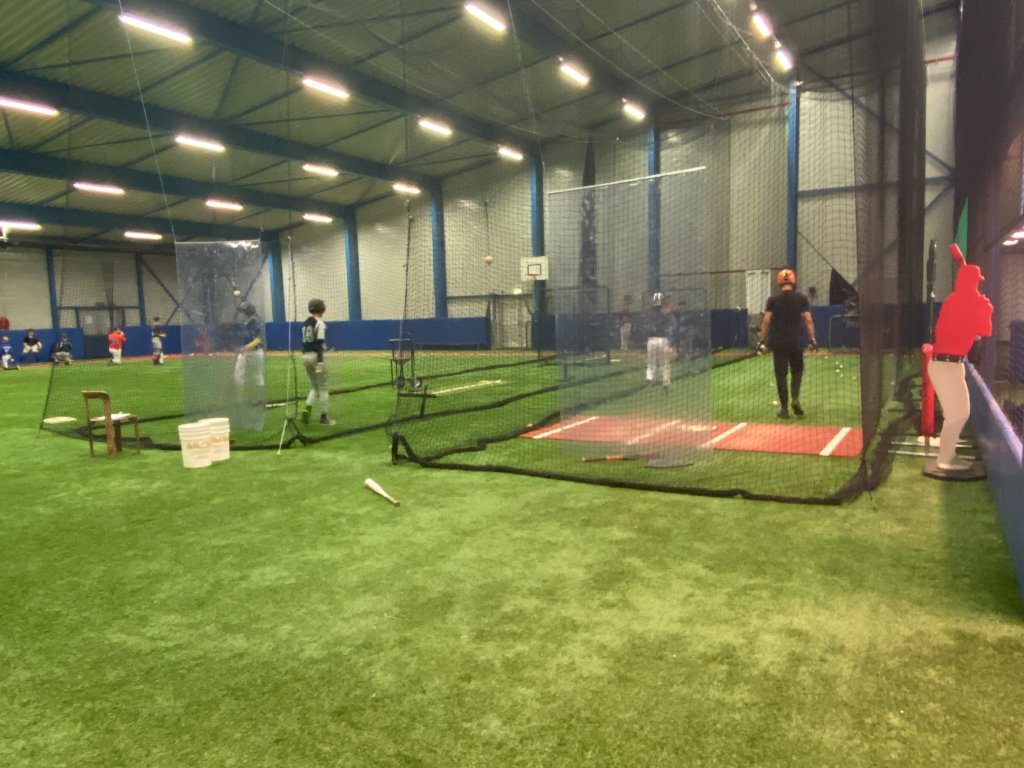
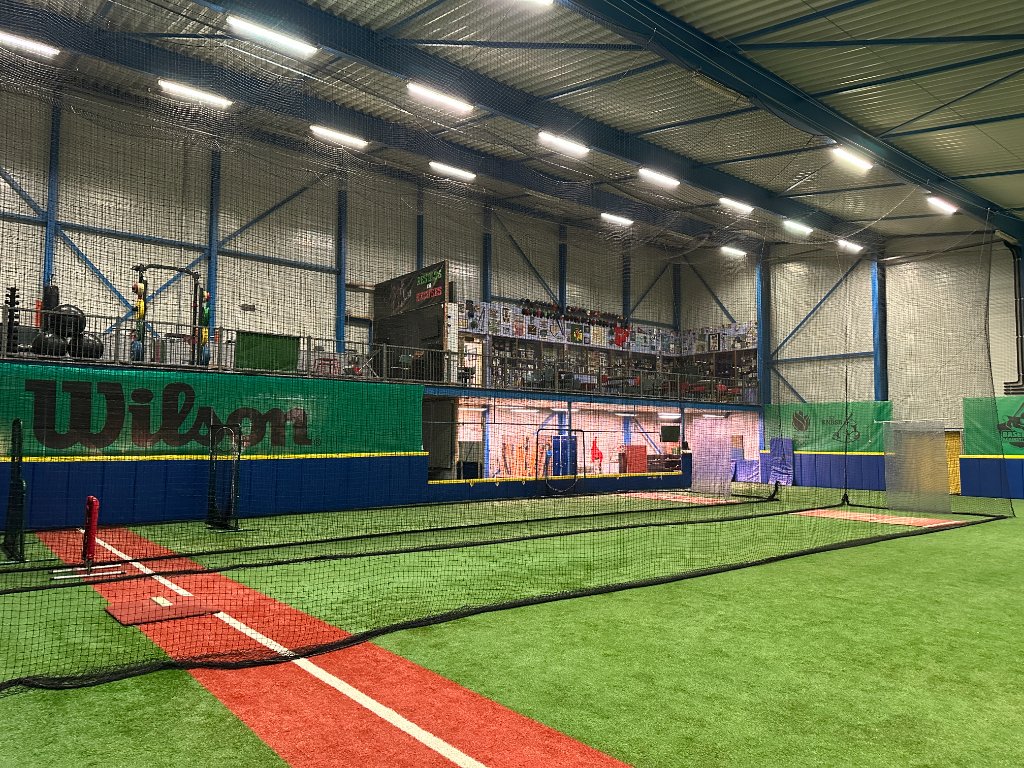
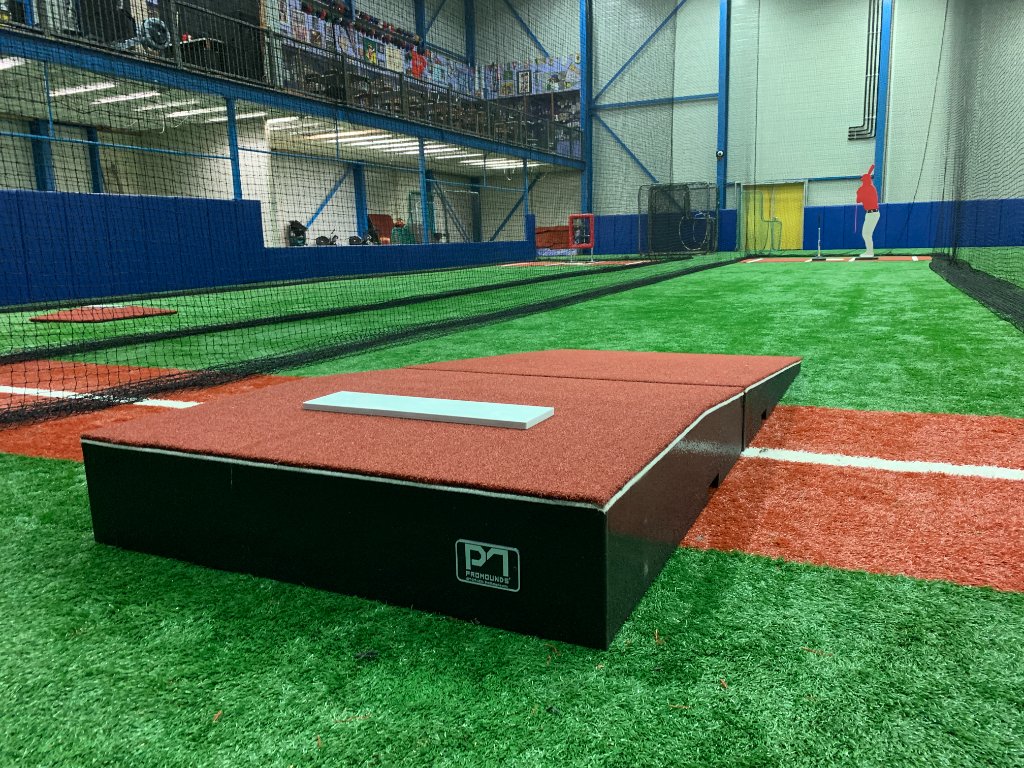
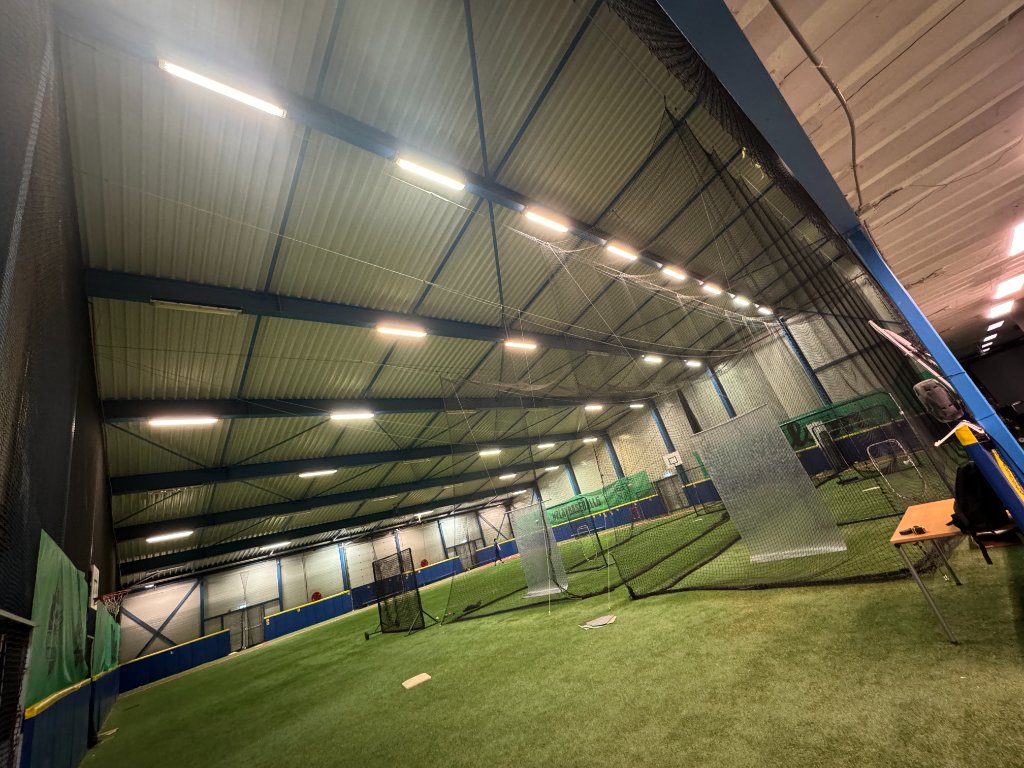
Herman Bonpad 5, 1067 SN Amsterdam. Fully indoor, so sessions run regardless of the weather.
Beyond Baseball
The human body doesn't know which sport it's playing. Our biomechanical principles apply to any overhead throwing or striking motion, giving athletes from all disciplines a performance edge.
Tennis
The serve motion in tennis shares the same kinetic chain as pitching. Hip-to-shoulder separation, elbow elevation, and wrist snap all transfer directly.
Padel
The overhead smash and bandeja run on the same rotational engine as a pitch: ground force, hip-shoulder separation, and a relaxed arm whip. Add real power to the fastest-growing racquet sport.
Cricket
Fast bowling relies on identical biomechanical principles: rotational power from the lower half, trunk rotation, and a high arm path for maximum velocity.
Baseball
The foundation of everything we do. Elite pitching mechanics built on data-driven biomechanical research and professional-level coaching.
Follow the Journey
@modernpitching